
Product News
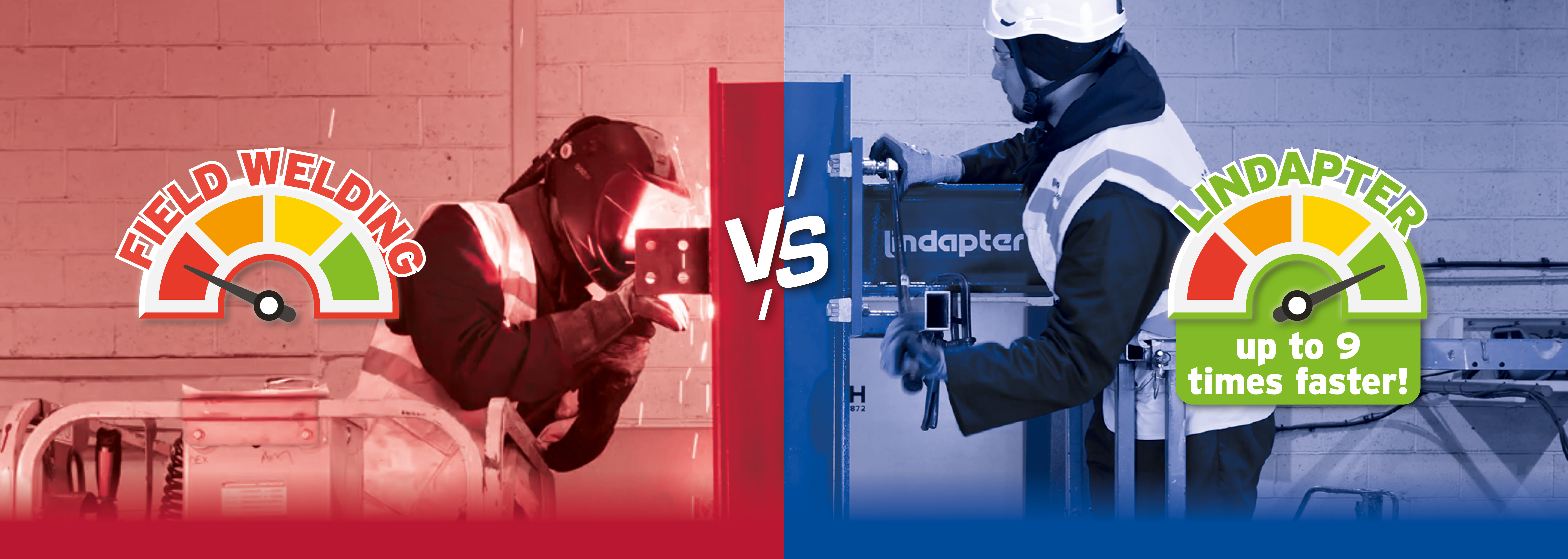
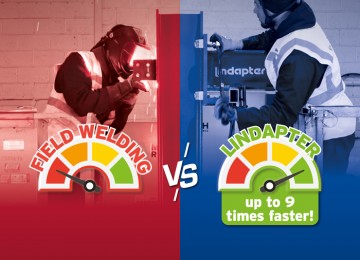
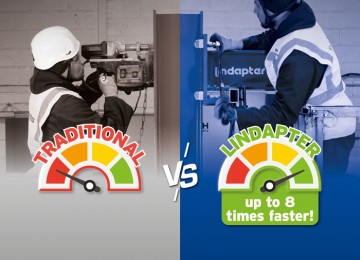
Lindapter Girder Clamps Are 9x Faster Than Field Welding

A few months ago, we put Lindapter girder clamps up against site drilling and bolting and published the results. The response was immediate: what about welding?
Welding is the other default the industry falls back on, and for many it carries even more overhead than drilling. So, we ran the same test again, this time against a site welded connection. Same rigour, same transparency, same insistence on measured numbers rather than estimates.
The Problem the Industry Has Been Living With
Site welding has a reputation for producing a strong, permanent connection, and in the right application it does. But strength on paper does not account for what it actually takes to get a welder onto a jobsite, qualified, equipped, and safely working at height or in a live environment.
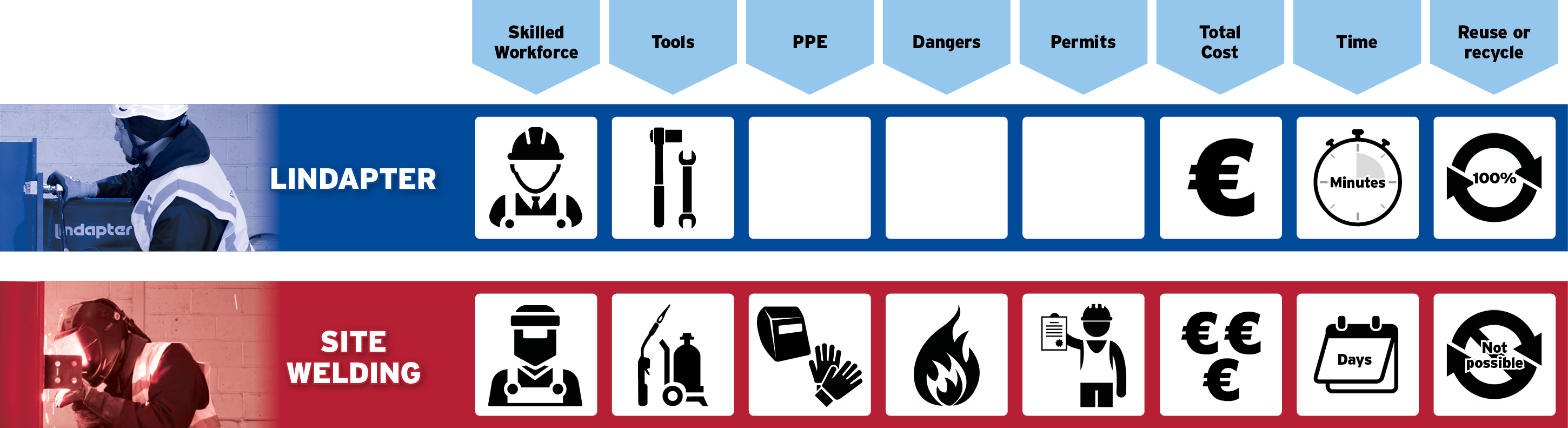
A welded connection is not a five-minute job. It is a sequence of preparation, execution, cooling, inspection and rework steps, every one of which adds time, cost and risk to a project. And because welding is classed as hot work, it drags a whole layer of compliance into every single connection: permits, fire watches, ventilation, and often a halt to any other trade working nearby.
Despite this, welding remains common practice across much of construction and fabrication. Not because it is the fastest or safest method available, but because it is familiar, and because qualified welders and their equipment are simply what many teams have always used.
Lindapter has argued for years that there is a faster, safer, equally strong alternative that removes hot work from the equation entirely. So once again, we went and measured it.
The Test: Same Connection, Same Conditions, Real Results
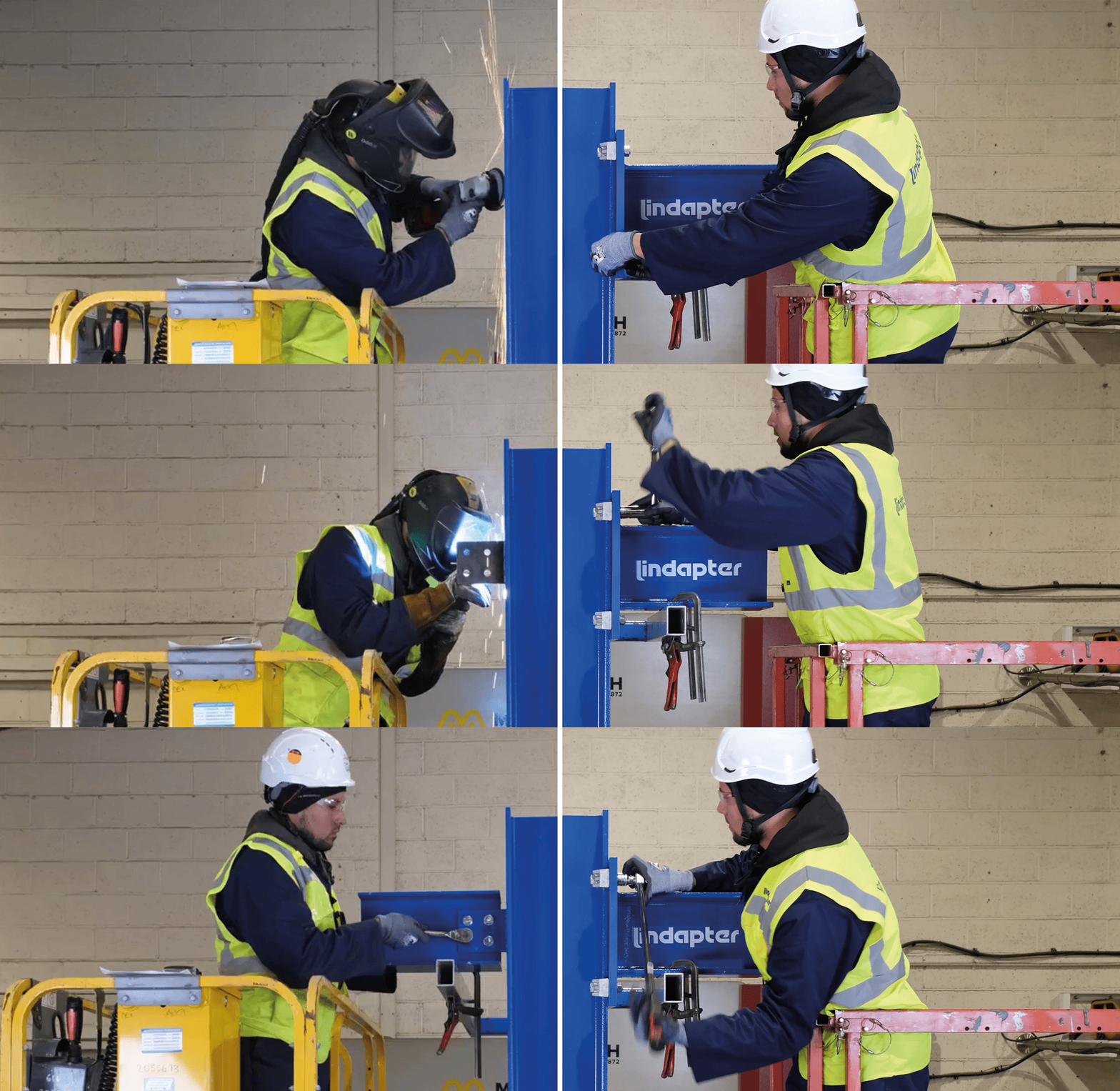
We repeated our controlled, like for like comparison with an independent fabricator. The brief: install the same four bolt configuration connection twice. Once using site welding. Once using Lindapter girder clamps. Same steel, same environment, same starting point, with the datum line for the top of the new steelwork pre marked on both sections to keep alignment consistent across both methods.
The only variable was the connection method.
We timed both from start to finish, on camera, so the process was transparent and the results were unambiguous.
The result:
- Site welding: 21 minutes 34 seconds
- Lindapter Girder Clamps: 2 minutes 24 seconds
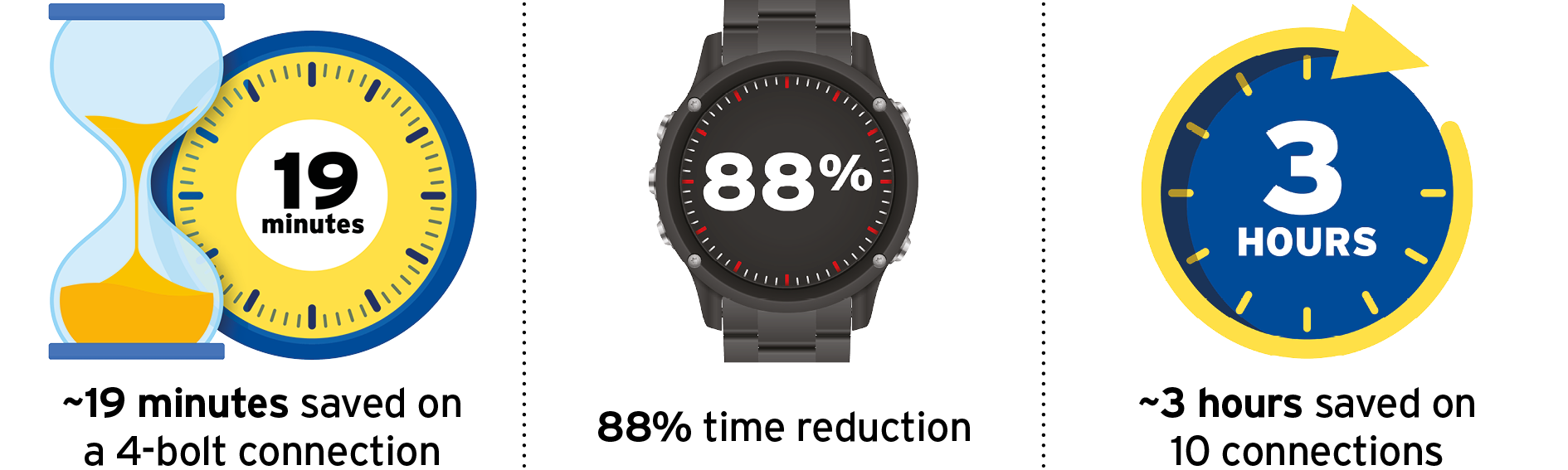
That is a time saving of 19 minutes 10 seconds on a single four bolt connection. Lindapter was 9 times faster, an 88.87% reduction in installation time.
These are measured, documented results from a controlled comparison using an independent fabricator, carried out under real working conditions, not estimates or projections.
Breaking Down the Welding Process, And Every Step It Demands
Welding a structural connection is not one action, it is a chain of steps, each one adding time and each one a point where something can go wrong.
Step 1, Equipment Setup
Before any welding starts, the team needs to get a welding machine, gas cylinders or wire feed, cabling and PPE to the connection point. On projects with connections at height or in awkward locations, moving this equipment repeatedly is a job in itself, and most setups still need a power source on site.
Step 2, Hot Work Permit and Fire Watch
Welding is hot work almost everywhere it happens. A permit is required before work can begin, and if the structure does not already have fire protection in place, a dedicated fire watch operative or multiple has to be present for the full duration of the weld, and often for a period afterwards too. That is another person, another cost, and another point of coordination before a single bead has been laid.
Step 3, Surface Preparation
The joint has to be cleaned back to bare metal, any coating, paint, rust or mill scale removed, and the edges prepared to the correct profile. Any contamination left on the surface risks a defective weld, so this step cannot be rushed.
Step 4, Tack Welding and Alignment
Before the full weld goes in, the pieces are tack welded to hold position. Getting this alignment right matters, because once the full weld is run, the joint is fixed. There is no adjusting a welded connection after the fact.
Step 5, Welding
The full weld pass, or passes, are run. This generates significant heat, UV radiation, fumes and sparks, and demands a qualified, certified welder working to the correct procedure for the joint and material. Weather, wind and access all affect how long this takes and how reliable the result is.
Step 6, Slag Removal and Cleaning
Once welded, slag and spatter need to be chipped, and wire brushed away before the joint can be inspected. Left on, they hide the true weld profile and any potential defects underneath.
Step 7, Cooling and Inspection
The weld needs time to cool before it can be safely handled or inspected. Visual inspection, and on many structural applications non-destructive testing such as ultrasonic or dye penetrant testing, is then required to confirm the weld meets specification. If a defect is found, the section may need to be cut out and rewelded entirely.
Step 8, Coating Reinstatement
Every weld burns back the protective coating well beyond the weld line itself, galvanising or paint is destroyed by the heat across a much wider area than a single drilled hole ever would be. That area then has to be prepared and recoated to prevent corrosion starting at exactly the point of connection.
The Disadvantages of Site Welding
The following points represent the compounding cost of choosing a welded connection over a clamped one:
- Requires a qualified, certified welder, not every operative on site can weld a structural connection, and availability of certified welders is an increasing constraint on project schedules.
- Classed as hot work everywhere it happens, permits, fire watches and, on many sites, a halt to other nearby trades are required for the duration of the work.
- No adjustability once welded, a tack welded and fully welded joint is fixed in position. Any misalignment found late means cutting the joint out and starting again.
- Weather and access dependent, wind, rain and confined access all affect weld quality and the time it takes to complete a joint safely.
- Generates fumes, UV exposure and burn risk, welding is one of the more hazardous jobsite activities from a health and safety standpoint, requiring ventilation, screening and dedicated PPE.
- Coating damage across a wide area, heat from welding destroys galvanising and paint well beyond the joint itself, requiring a larger recoating job than a drilled connection.
- Defects require cutting out and rewelding, a failed inspection is not a quick fix. It is a return to Step 3 for that connection.
- Introduces heat affected zones into the steel, welding alters the metallurgy of the steel around the joint, which is accounted for in design but represents a permanent change to the material.
The Lindapter Approach, And Why It Eliminates All of This
Lindapter girder clamps grip the flange of an existing steel section without heat, without a certified welder, and without altering the steel in any way. There is no hot work, no cooling time, no inspection wait, and no coating to reinstate.
- Fully adjustable, position can be set, checked and altered before the clamp is locked off. A welded joint offers no such second chance.
- No hot work permit or fire watch, because there is no heat involved, the compliance burden that comes with welding simply does not apply.
- No certified welder required, the connection is made with standard hand tools by the installer already on site.
- No heat affected zone, the steel's material properties are unchanged by the connection process.
- No coating damage, because nothing is heated or cut, galvanising and paint remain intact around the joint.
- No inspection or cooling delay, the connection is complete and load ready as soon as it is tightened, there is no cure or cooling time to build into the schedule.
- No fume extraction or weather dependency, the process is unaffected by wind, rain or confined ventilation, and creates none of the fumes associated with welding.
- Consistent installation time, unlike welding, which varies with joint access, weather and welder skill, clamp installation time stays predictable connection after connection.
The Numbers at Scale
A single connection saving of 19 minutes 10 seconds is meaningful. At scale, across a project with dozens or hundreds of connections, it compounds fast.
Based on the measured results from our comparison:
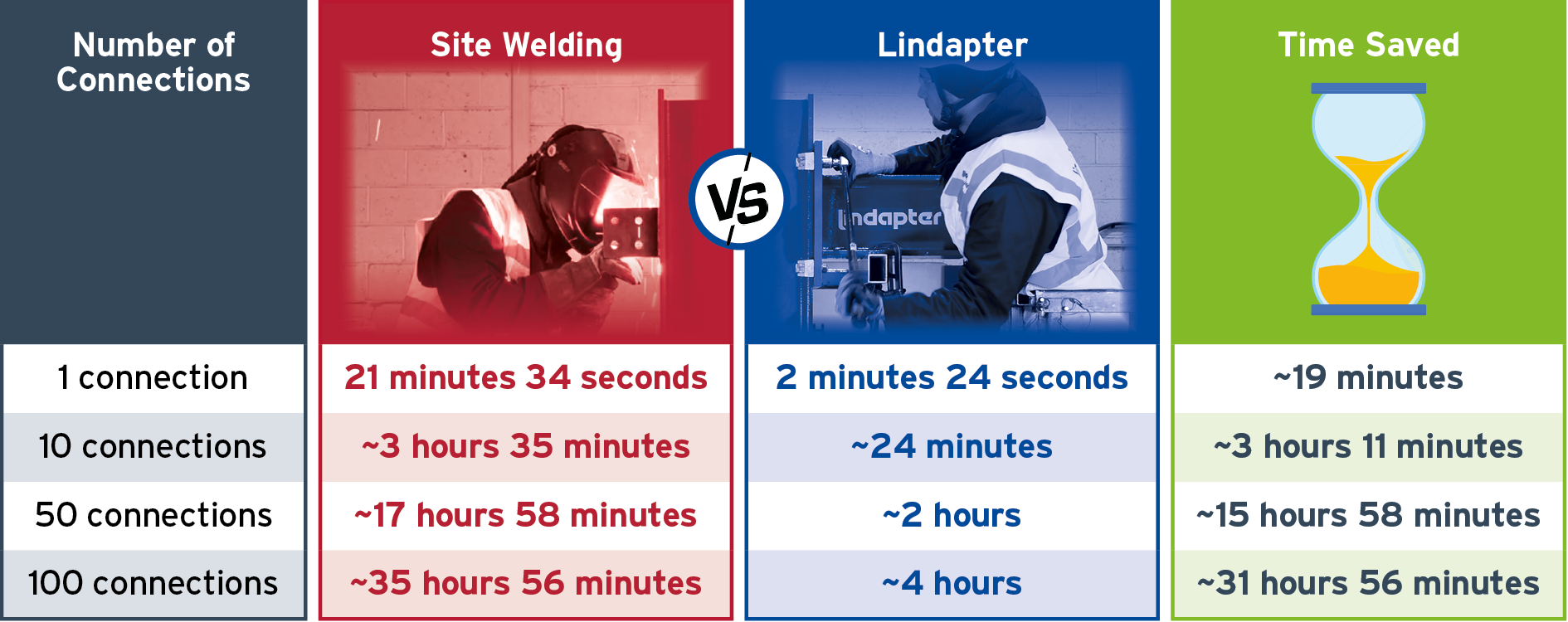
These figures use the measured per connection times. In practice, the real-world gap is likely wider still.
Welder fatigue, weather delays, permit renewals, fire watch rotas and equipment repositioning all slow real welding progress on a live multi connection project in ways a controlled test does not capture. None of these factors touch the Lindapter installer. The tools are light, the process is consistent, and there is no hot work coordination to manage between connections.
The Broader Industry Argument
The pressures facing structural steel projects have not eased. Labor costs are rising. Certified welders are harder to source and retain than general labor. Schedules are tighter. Health and safety scrutiny around hot work, fume exposure and working at height is more demanding than ever.
Against that backdrop, removing welding wherever it is structurally appropriate is not just a speed argument. It is a risk reduction argument. Every hot work permit is a liability. Every welder working at height with live gas or an arc is a safety exposure. Every failed inspection is a schedule event. Every burned back coating is a long-term corrosion problem waiting to happen.
Lindapter is not just a faster connection method than welding, it is a fundamentally lower risk & more cost-effective one.
You asked for the numbers. We went and got them. The results speak for themselves.
And if you’ve not already seen our Lindapter Girder Clamps vs Drilling and Bolting speed comparison video, watch it here.
How can we
help you?


Reasons to choose Lindapter
-

Save time and money
Clamping two steel sections together avoids time-consuming welding or conventional drilling and bolting.
-

Safer connections
Drilling and welding in the field is avoided, removing the need for hot work permits and encouraging safer site conditions.
-

High strength
Lindapter clamps are manufactured from high strength materials to resist high load requirements and harsh environments.
-

Industry leading approvals
Lindapter has earned a reputation synonymous with safety and reliability, gaining multiple independent approvals.
-

Adjustable
Quickly align steel sections by sliding the section into the correct position before tightening the Girder Clamp to complete the installation.
-

Free connection detailing
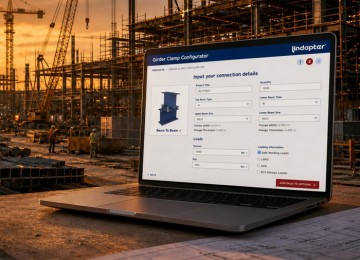
Lindapter’s experienced Engineers can detail a custom connection based on your specific requirements free of charge.
You must have a Lindapter account to access this content
Log in to your account
Register for an account
Don't have an account?
Click here to registerAlready registered?
If you have registered for an account but have not received your confirmation email, please click here to resend.

Headquarters
Lindapter InternationalLindsay House, Brackenbeck Road
Bradford, West Yorkshire
BD7 2NF
United Kingdom Map and directions
news
- Environmental Policy
- T&Cs
- Privacy
- Cookies
- © Lindapter International 2026. All rights reserved.